
International Freight Quote Checklist: Documents & First Shipment
An international freight quote needs more than two country names. The commodity, exact pickup and delivery points, package count, dimensions, gross weight and cargo-ready date help determine which transport options can be assessed. If this is your first shipment, use this checklist to prepare a clear request and compare offers on the same basis.
Request a freight quote from Farvahar Group · Calculate shipment CBM
How to plan your first international shipment
- Define the cargo and route. Ask your supplier or warehouse for packing details and the pickup location, then specify where you need the goods delivered.
- Assess transport options. Explain your deadline, dimensions, weight and cargo restrictions so sea, road or air freight can be considered. The lowest main freight charge may not fit your delivery needs.
- Confirm scope and documents. Before booking, agree on included and excluded charges, payment terms, rate validity and each party's responsibilities.
Start with Farvahar's freight services to compare transport modes. For that specific trade lane, our shipping from China to Iran guide offers additional context.
International freight quote checklist: seven essential inputs
1. Exact origin and destination
Specify the country, city and pickup and delivery points. “China to Iran” does not define the same scope as collection from a Shanghai factory and delivery to a Tehran warehouse. State whether you need port-to-port, airport-to-airport or door-to-door service.
2. Commodity and special requirements
Describe the goods, their purpose and whether they are new or used. Flag batteries, chemicals, liquids, temperature-sensitive goods and oversized cargo from the start. For dangerous goods, provide the safety data sheet (SDS) and relevant particulars for review. Acceptance must be confirmed for the chosen service and route.
3. Packaging, quantity and dimensions
List the number of cartons, pallets, crates or other packages. Give the external length, width and height of each package type, with units, including final packaging. If sizes differ, list each group separately and say whether the packages can be stacked.
4. Gross weight and volume
Gross weight includes the goods and their packaging. Provide total weight in kilograms or tonnes and volume in cubic metres where available. For containerised cargo, state the required container type and quantity, or supply cargo details so suitable equipment can be assessed.
5. Cargo-ready date and delivery priority
Provide the cargo-ready date, latest acceptable collection date and delivery urgency. Distinguish proposed transit time from collection, document preparation and clearance time. Ask what events mark the start and end of any quoted timeline.
6. Agreed Incoterm and named place
If your purchase contract uses Incoterms, specify the rule, named place or port and edition. “FOB” without a port is incomplete. FOB applies to sea and inland waterway transport. When containers are handed over at a terminal before loading aboard the vessel, discuss whether FCA is appropriate with your contracting party.
7. Additional services
Identify supplier pickup, packing, insurance, storage, customs formalities, final delivery or special handling needs. Cargo value and proposed insurance coverage should be reviewed separately. Requesting a quotation does not itself book transport or issue an insurance policy.
Which documents are needed for a quote and shipment?
Cargo and route details are the starting point for an initial estimate. A pro forma invoice or preliminary packing list can help if available. Final documents depend on the commodity, countries involved, transport mode and applicable requirements. Confirm the document list for your shipment before dispatch.
- Commercial invoice: records the transaction, goods description and value. Party and cargo details should be accurate and consistent.
- Packing list: identifies package counts and contents, packing types, weights and dimensions.
- Transport document: a sea bill of lading, air waybill or road transport document is prepared as appropriate during the shipment process. It usually has not been issued when you request your first estimate.
- Shipment-specific documents: a certificate of origin, commodity-related permits or certificates, and dangerous goods documentation may be required. Confirm the exact requirements for the individual cargo and route.
CBM example: how much space do 20 cartons occupy?
This is an illustrative calculation: 20 identical cartons with external dimensions of 60 × 40 × 50 centimetres each.
CBM = 20 × 0.60 × 0.40 × 0.50 = 2.40 m³
Total volume is therefore 2.4 cubic metres. Record actual weight separately. Volume alone does not determine the final freight cost or chargeable weight; the charging basis and service minimums should be stated in the quotation. For different package sizes, calculate and add each group's volume. Use Farvahar's CBM calculator and our CBM and volumetric weight guide to prepare these inputs.
How to compare two freight quotations
Request both quotations for the same cargo, route and service scope. Then check these points in writing:
- Which main freight, origin, destination and final delivery charges are included?
- Which costs are excluded, and when might additional charges apply?
- What are the currency, charging basis, minimum charges and validity period?
- What route, transfers and proposed schedule are being offered?
- For container freight, what free time and storage or equipment-related charges apply?
- What insurance coverage, responsibilities, payment terms and change or cancellation conditions apply?
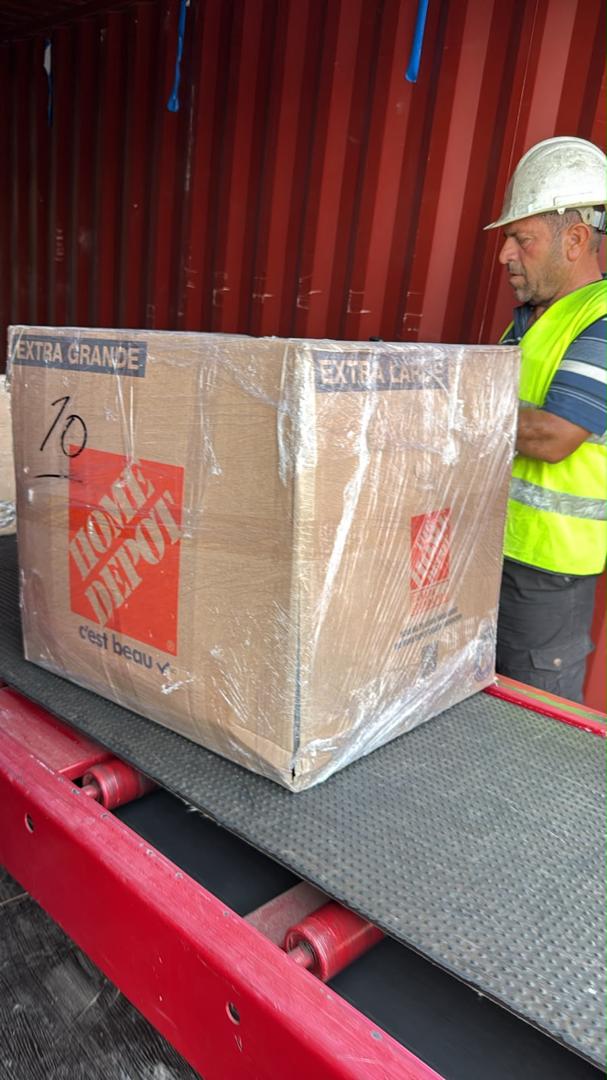
For routes requiring special handling, clarify the operation as well. Our real cross-stuffing project in Mersin includes photos and video associated with household goods transported from Canada to Iran. Your shipment's operational needs must be assessed separately.
Copyable freight quote request template
Hello, please assess the route and provide a quotation for this shipment:
Origin and pickup point: …
Destination and delivery point: …
Commodity and special requirements: …
Packaging type and package count: …
External dimensions by package group, with units: …
Total gross weight and CBM: …
Cargo-ready date and delivery priority: …
Incoterm, named place and edition, if agreed: …
Required services and available documents: …
Please specify included and excluded charges, the charging basis, quotation validity and service conditions.
Frequently asked questions
Do I need all final documents for an initial quotation?
You can start with preliminary cargo and route details, clearly identifying unknown information. An initial offer may change after dimensions, weight, documents and service conditions are confirmed. Agree on final details before booking.
What if I do not know the weight or dimensions?
Ask your supplier or warehouse to weigh and measure the packed cargo. Photos help explain the shipment but do not replace reliable measurements. Label estimated figures as estimates.
Can I get a firm freight price using CBM alone?
No. The route, weight, commodity, packaging, timing and service scope also matter. Calculated volume is one input to a quotation.
Which transport mode is best for a small shipment?
There is no universal answer. Compare available LCL sea freight, road and air options against your route, urgency, weight and total service costs.
Send your cargo details for a route assessment
Prepare the checklist and use Farvahar Group's contact page to coordinate a shipment review. Explore our sea freight, road freight and air freight pages for more information.
 فارسی
فارسی English
With our freight request you can design your project in no time at all.