
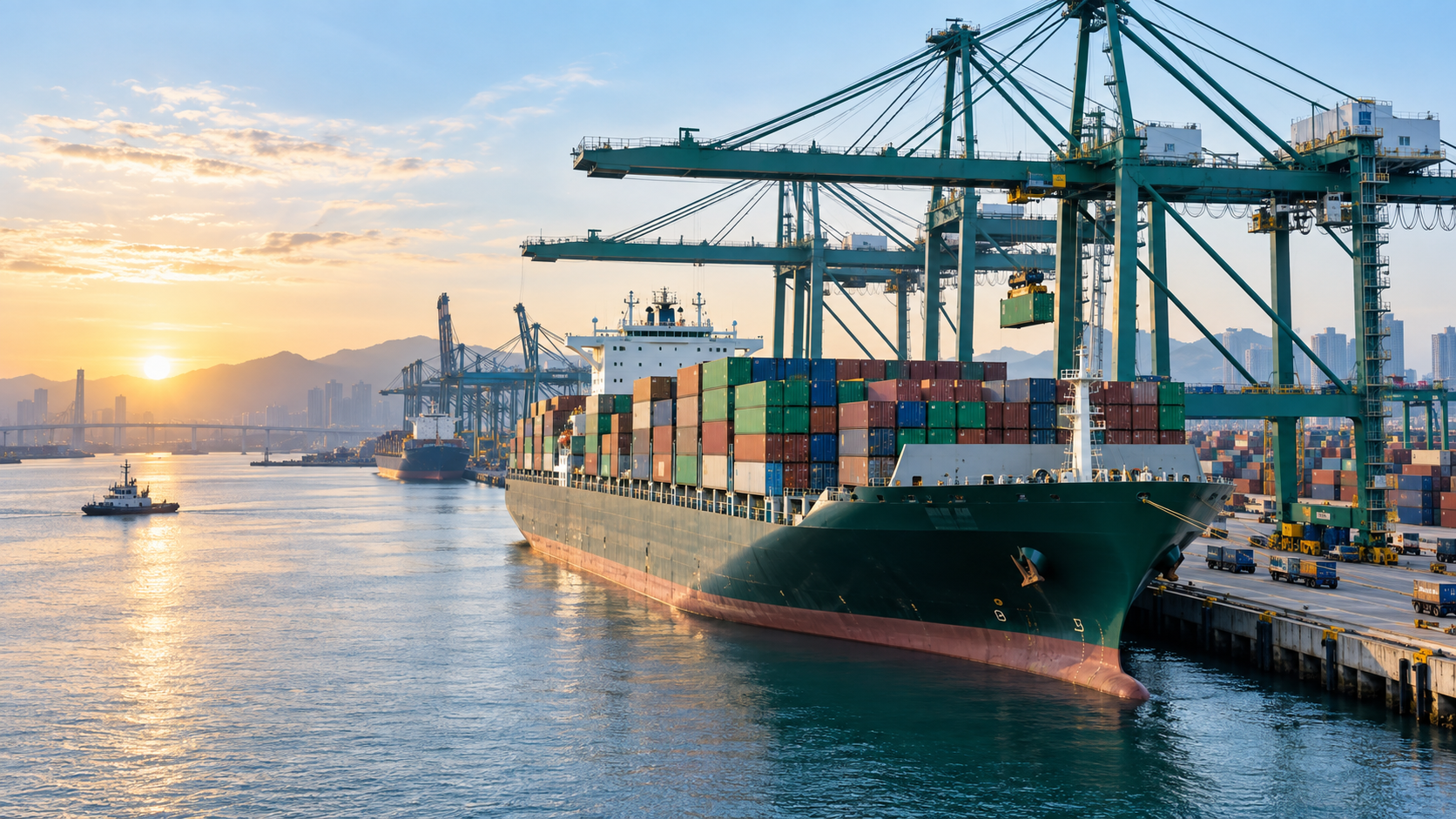
Sea Freight from China to Iran | FCL, LCL & Transit Time
Sea freight from China to Iran is often one of the most economical choices for commercial orders, higher-volume cargo and shipments that are not extremely urgent. The final cost, however, is more than the carrier’s ocean freight. Service type, origin port, local charges, documents, weight and volume, Incoterms and container free time should be reviewed before booking.
Main sea freight routes and ports
The origin port should be selected according to the supplier’s real location, available sailings, inland cost and cargo restrictions—not simply the best-known Chinese port.
- East China: Shanghai and Ningbo-Zhoushan are commonly evaluated for suppliers in Shanghai, Jiangsu and Zhejiang.
- South China: Shenzhen/Yantian and, in some cases, Guangzhou are relevant for factories in Guangdong and nearby areas.
- North and Northeast China: Qingdao and Tianjin are common options for northern origins.
- Southeast China: Xiamen can be suitable for selected origins and schedules.
In Iran, Shahid Rajaee Port in Bandar Abbas is a major container gateway. Depending on current carrier services, restrictions, commodity and schedule, the shipment may move directly or through transshipment. The actual route and connection must be confirmed at booking.
FCL or LCL?
| Criterion | FCL — Full Container Load | LCL — Less than Container Load |
|---|---|---|
| Space | A container is booked for one shipper’s cargo | Space is shared among compatible shipments |
| Best suited to | Higher volume, regular shipments or cargo requiring greater handling control | Small to medium volumes that do not fill a container |
| Cost basis | Container freight plus equipment-related charges | Weight/measurement plus consolidation and deconsolidation charges |
| Handling | Fewer openings and transfers after stuffing | Warehouse consolidation and destination separation are required |
| Timing | Usually more controllable once the container is ready | May depend on consolidation and console schedules |
| Damage exposure | Greater control over stowage and seal | Strong packaging is essential because of extra handling |
The economic boundary between FCL and LCL is not a fixed CBM figure. Density, pallet count, stackability, CFS charges, package weight and destination costs can change the decision. Use the CBM calculator and request both options for the same cargo details.
How the sea freight cost is calculated
- China inland transport: pickup from the factory or supplier’s warehouse to the port or consolidation facility.
- Origin handling: terminal, documentation, warehouse, seal, export and operational services.
- Ocean freight: container-based for FCL or weight/measurement-based for LCL.
- Destination charges: unloading, port, documentation, storage and delivery according to the quotation.
- Cargo insurance: based on cargo value, commodity and policy conditions.
- Customs and duties: separate from freight and dependent on tariff, value and regulation.
- Final delivery: inland movement from the Iranian port or warehouse to the customer’s destination.
A public fixed price without shipment details can be misleading. Provide gross weight, CBM, package count and dimensions, commodity, HS code if available, pickup city, final destination, value, Incoterm and cargo-ready date.
Transit time from China to Iran
Transit time should be separated into the advertised port-to-port sailing time and the total door-to-door time. Cargo collection, export formalities, waiting for departure, transshipment, discharge, customs and inland delivery can extend the complete schedule.
For some common scenarios, a broad range of approximately 25 to 45 days may be used for initial planning, but it is not a delivery guarantee. Estimated departure and arrival dates must be confirmed for the actual booking. Time-sensitive supply chains should include contingency for schedule changes and destination formalities.
Documents commonly required
- Commercial Invoice with an accurate commodity description and value.
- Packing List showing package count, dimensions, net weight and gross weight.
- Complete shipper, consignee and notify-party details.
- HS code information and commodity-specific permits where applicable.
- Bill of Lading instructions checked before final issuance.
- Certificate of Origin or inspection documents where required.
- MSDS, technical data and dangerous-goods declaration for regulated cargo.
- Verified Gross Mass (VGM) for a packed container.
General descriptions such as “parts” or “materials” are insufficient for a professional acceptance check. The technical name, use, material, brand/model and new or used condition should be clear before booking.
Operational process
- Cargo review: verify commodity, weight, dimensions, packaging, Incoterm and ready date.
- Route design: compare origin ports, inland pickup, FCL/LCL and available schedules.
- Transparent proposal: define scope, validity, included charges and exclusions.
- Booking and origin coordination: coordinate the supplier, booking and port/CFS cut-off.
- Document control: check bill of lading details against invoice, packing list and party information.
- Movement and tracking: follow key events and communicate material schedule changes.
- Arrival and delivery: coordinate destination documents, customs and inland delivery within the agreed scope.
Risks to check before booking
Demurrage, detention and free time
Free-time rules are not identical across quotations. Confirm the number of days, when counting starts and the tariff after expiry.
VGM and weight discrepancies
The packed container’s verified gross mass is an operational safety requirement. Cargo, packaging, pallets and container tare must be included.
Dangerous or restricted cargo
Batteries, chemicals, liquids, powders, magnetic products and selected equipment can require separate approval and documentation. Concealing the cargo’s nature can lead to rejection, penalties or delay.
Inadequate LCL packaging
LCL cargo is handled more often and moves beside other shipments. Use suitable cartons or crates, pallets, moisture protection, labels and clear stacking restrictions.
Frequently asked questions
Is sea or air freight better for a small shipment?
Consider chargeable weight, value, urgency, CFS costs and the final destination. Air may be more practical for small urgent cargo; sea usually has an economic advantage for less urgent higher-volume cargo.
Does the rate include customs clearance and import duties?
Not necessarily. Freight, origin charges, destination charges, insurance, clearance, duties and final delivery are separate unless explicitly included.
Can every commodity move as LCL?
No. Dangerous, unusually heavy, oversized, leaking, odorous or incompatible cargo may be restricted. Acceptance must be confirmed before delivery to the origin warehouse.
How is sea cargo tracked?
Key events are monitored using shipment, bill of lading or container references. Estimated dates can change with carrier schedules, and private customer shipment data is not published on public pages.
Get a shipment-specific FCL or LCL plan
Send your packing list, origin, destination and cargo-ready date. Farvahar Group will review the suitable origin port, cost structure and booking requirements.
Request a Sea Freight Quote Sea Freight Services فارسی
 English
With our freight request you can design your project in no time at all.